
Direct Answer:
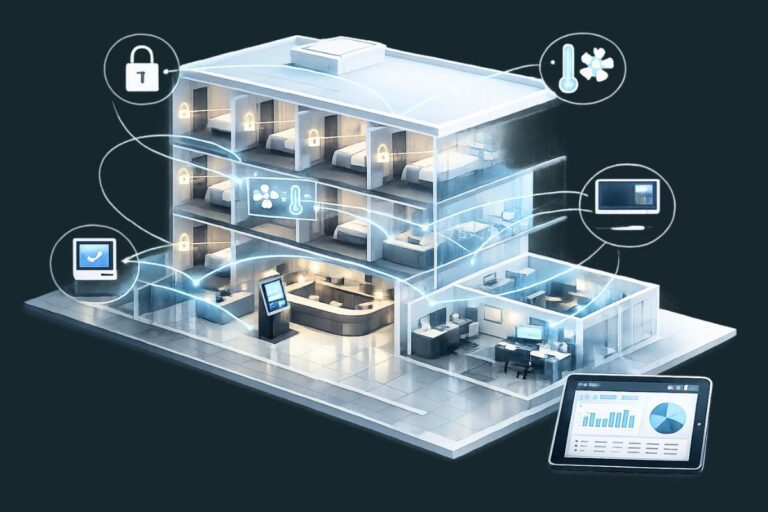
A smart hotel is a property that uses IoT (Internet of Things) devices, automation, and AI to streamline hotel operations and deliver a seamless guest experience. Smart hotels connect room controls, access systems, check-in processes, and energy management on a centralized platform, mainly the property management system, reducing manual work for staff while giving guests more convenience and control over their stay.
Managing a hotel the old-fashioned way is getting harder. Physical keys get lost, front desk queues pile up, and staff deal with heavy workloads trying to handle everything manually.
Many hotel owners used to wonder, ‘What is a smart hotel?’ They had no idea what the technologies involved.
Now, it’s no longer just a trend. With the hotel automation system reshaping how properties operate, hotels that invest in smart technology today are the ones setting the standard tomorrow.
In this guide, ‘What is a smart hotel?’ you’ll learn everything about the smart hotel and automation, the key systems powering it, and why it matters for your property.
The 5 Core Characteristics of a Smart Hotel
Characteristic | What It Means |
Automation | Tasks like check-in, room controls, and energy management run automatically |
Connected Systems | All devices and software communicate with each other in real time |
Centralized Control | Staff manage everything from a single dashboard |
Data Visibility | Real-time reports on energy, occupancy, and guest behavior |
Improved Guest Experience | Faster, smoother, more personalized stays |
Smart hotels didn’t appear overnight. The concept started in the late 1990s with basic electronic key cards.
By the 2010s, IoT and cloud computing brought full-scale automation within reach, even for independent properties. Today, smart hotel technology is a proven investment with measurable returns.
How Smart Hotel Automation Works
Smart hotel automation works by connecting IoT devices to a cloud-based platform. When a guest or staff member takes an action, like checking in, unlocking a door, or turning on the lights, data flows through the network in real time and updates a centralized management dashboard.
A smart hotel automation system follows a clear sequence behind the scenes:
- A guest or staff member acts (unlocks a door or checks in at a kiosk).
- The IoT device sends data to the hotel’s network instantly.
- The data passes through a cloud system or software layer.
- Hotel management receives live updates on a centralized dashboard.
The Guest Journey in a Smart Hotel
- The guest arrives and checks in at a self-check-in kiosk.
- Scans their ID or passport and enters their booking reference.
- Receives an RFID card or mobile digital key.
- Unlocks their room by entering the provided passcode.
- Enjoys a personalized stay: automated lighting, temperature, and room controls await.
The whole operation relies on a property management system (PMS), which acts as the central brain connecting every device and department seamlessly.
Smart Access Control Systems
Smart hotel access control replaces physical metal keys with RFID cards and digital keys, such as passcodes. These systems reduce lost-key incidents, prevent unauthorized entry, and provide both staff and guests with faster, more secure room access.
Traditional key management creates real problems for hotel operators:
- Guests lose physical keys, and staff have to reissue them.
- Disputes arise over unauthorized entry claims.
- There’s no reliable way to track who accessed a room and when.
Smart hotel locks with RFID technology and mobile key access solve all of these issues directly.
Benefits for Hotel Operations
- Clear entry permissions for guests and staff reduce security risks.
- Time-limited RFID cards expire automatically at check-out; no manual deactivation needed.
- Digital audit trails let staff monitor real-time access logs remotely and resolve disputes quickly.
Benefits for Guests
- Fast, keyless entry without queuing at the front desk.
- Mobile keys that can’t be duplicated give genuine peace of mind.
- Far fewer front desk calls are related to lost or faulty keys.
Smart access control is typically the first system hotels implement when transitioning to a smart hotel model, and it delivers visible positive results from day one.
Self-Check-In and Check-Out Systems
Self-check-in kiosks are automated stations in the hotel lobby that allow guests to check in and check out without staff assistance. They scan ID documents, process payments, and issue room keys 24/7. Rest is not needed.
Long front desk queues are one of the most consistent guest complaints in the hospitality industry. Late-night arrivals make it worse, putting pressure on staff and leaving guests frustrated before they’ve even reached their room.
Self-check-in kiosks, like Evernet Malaysia, function as 24/7 automated assistants that handle the entire check-in process independently.
What Kiosks Can Do
- Verify guest identity and booking reference automatically.
- Process deposits and payments securely.
- Issue RFID cards or activate mobile digital keys.
- Upsell room upgrades or hotel services.
The result: shorter wait times, happier guests, and freed-up staff who can focus on delivering genuine, exceptional services rather than administrative tasks.
In-Room Smart Controls That Personalize the Guest Stay
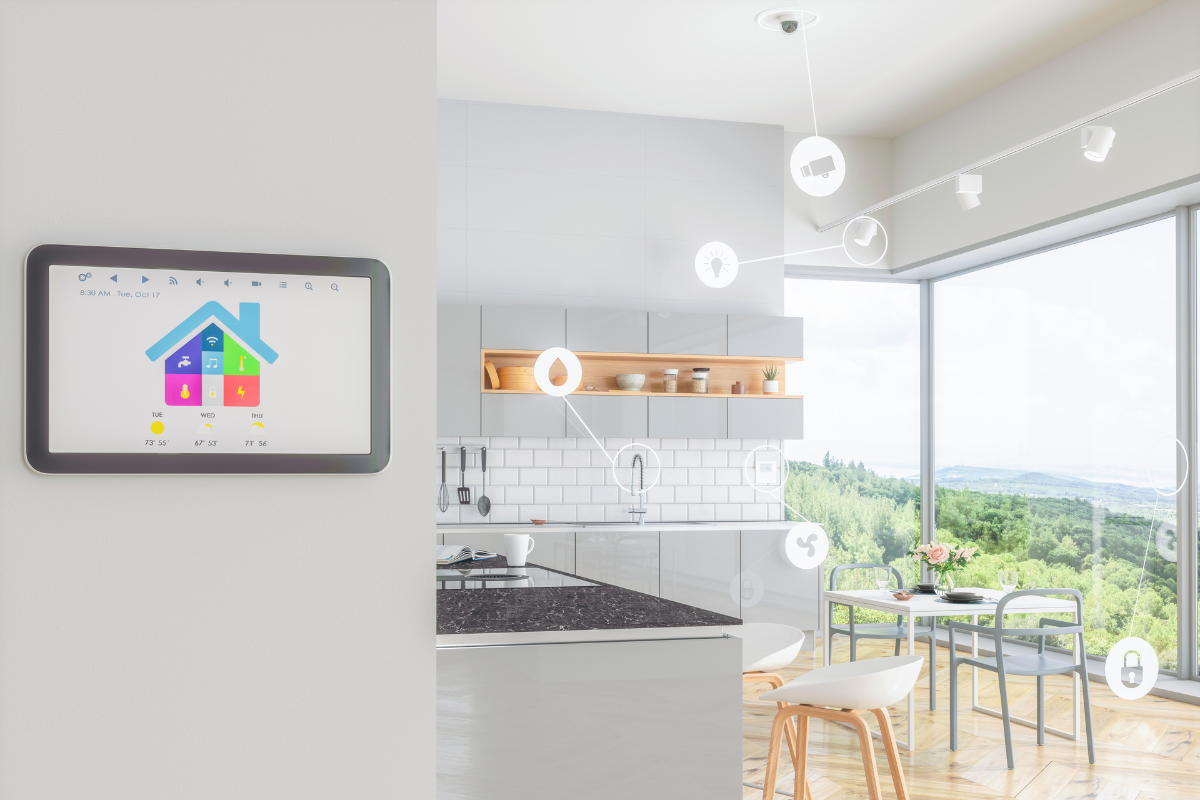
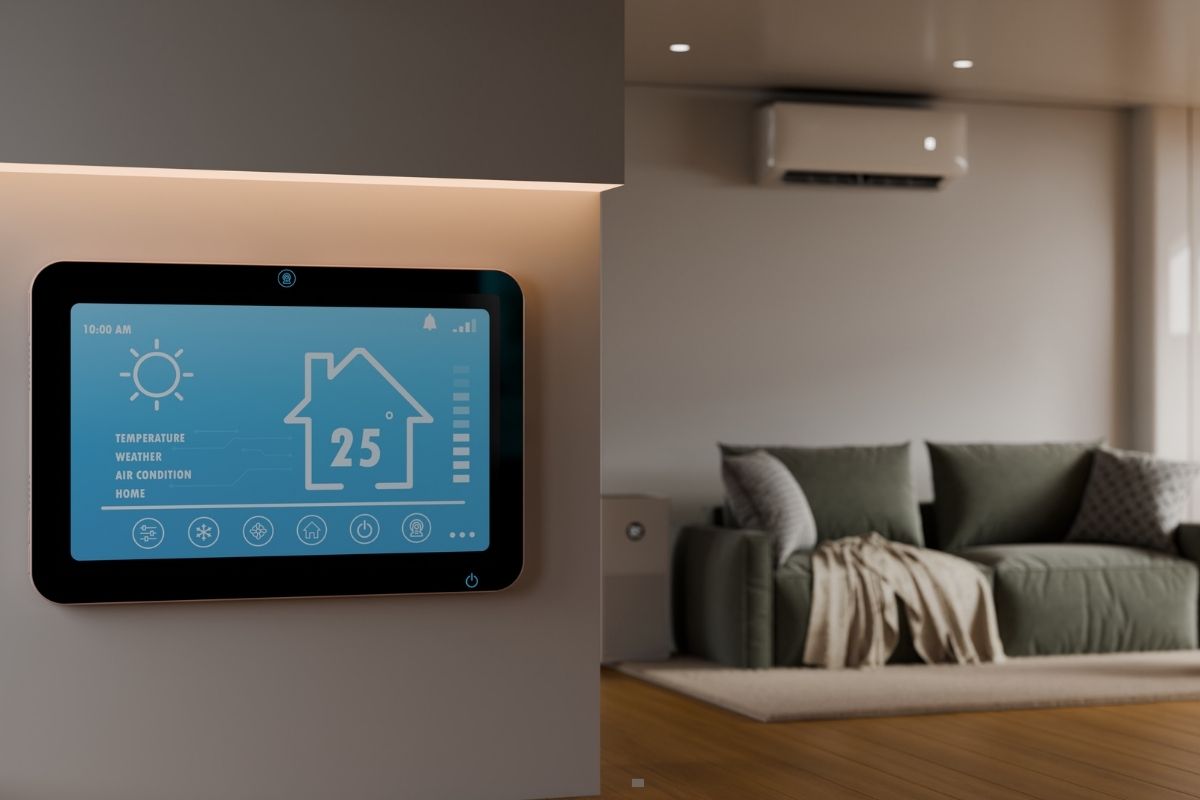
Smart in-room controls let guests adjust lighting, air conditioning, curtains, entertainment, and request amenities and delivery from a single tablet or voice assistant. They can also be configured to adjust automatically based on occupancy and guest preferences.
Imagine a guest walking into their room and having the lights, AC, and music automatically adjust to a pre-set comfort level. The TV screen displays a personalized welcome message with their name.
Guests can also request amenities and delivery through the system by speaking with the AI voice assistant. The AI assistant immediately sends the requests to the relevant departments. Quick and easier approach without making a call.
That’s exactly what Raizo smart room automation delivers, offering guests one of the most memorable parts of their stay.
3 Key Personalization Modes
- Presets: Predefined settings for lighting, temperature, and window blinds. The system learns guest preferences and adjusts accordingly over time.
- Occupancy-Based Behaviors When a guest leaves the room, the system automatically switches off or dims the lights and activates HVAC energy-saving mode. When the guest returns, it goes back to his preferred settings.
- Energy-Saving Logic: Thanks to the help of AI, the system analyzes weather forecasts and behavior patterns to regulate room temperature, keeping guests comfortable while cutting energy waste.
Centralized Hotel Management Systems
A Property Management System (PMS) is the central platform that connects all smart hotel systems. It allows hotel staff to manage room status, guest access, maintenance requests, and operational data from a single dashboard, without physically visiting each room.
Every smart hotel runs on a Property Management System (PMS), the operational core that connects every system as a whole.
From the PMS dashboard, your team can:
- Monitor and manage access permissions for guests and staff.
- Assign specific roles and accountability levels to different team members.
- Receive real-time alerts on guest requests and room issues.
- Review audit trails to resolve access disputes quickly.
- Track room status: occupied, vacant, or ready for check-in.
What PMS Saves You
- Fewer time-consuming manual tasks throughout the day.
- Less back-and-forth between floors and departments.
- Faster issue resolution because problems are visible immediately.
The PMS doesn’t just manage data; it enables your entire team to make faster, more informed decisions that directly impact guest satisfaction and operational efficiency.
Hotel Energy Management Systems That Cut Costs and Support Sustainability
A hotel Energy Management System (EMS) automatically controls lighting, heating, and cooling based on real-time room occupancy. This reduces energy waste in empty rooms and lowers utility costs significantly, typically by 20–30% in occupied hotels.
Energy is one of the highest operating costs in hotel management. An Energy Management System (EMS) addresses this directly by automating power use across the entire property.
How the EMS Works: 4 Key Stages
Occupancy Signals: Motion sensors detect whether a room is occupied or empty. When a guest leaves, the system dims lights and reduces temperature automatically. When they return, it restores comfort settings within seconds.
Temperature Setpoints: The EMS calculates precise cooling and heating schedules based on occupancy status, time of day, and location zone so rooms are always at the right temperature when guests arrive.
Scheduling: The system links to the hotel’s master calendar. Once a guest checks out, the room automatically switches to energy-saving mode until the next booking activates it.
Zone Control: The property is divided into zones, each managed by its own sensors and controllers. Common areas, corridors, and back-of-house spaces are optimized independently from guest rooms.
Monitoring energy patterns via the PMS dashboard helps you spot usage anomalies and make data-driven decisions about your property’s sustainability performance.
Smart Housekeeping and Maintenance Systems
Smart housekeeping systems automate task assignment for cleaning and maintenance staff based on real-time room status. When a guest checks out, the system immediately notifies the relevant team, reducing turnaround time and keeping room availability accurate.
Getting rooms turned around quickly between check-outs and check-ins is a constant challenge, especially in high-occupancy periods.
Smart housekeeping systems solve this by integrating with the PMS to create a real-time workflow between departments.
How It Works in Practice
- The PMS detects a check-out and automatically generates a cleaning assignment.
- Housekeeping staff receive the task on their mobile devices instantly.
- Staff update room status in real time; no more manual calls to the front desk.
- Maintenance issues flagged by guests are automatically delivered to the engineering team.
The outcome: fewer out-of-order rooms, faster response to guest complaints, and a team that always knows what needs to be done next.
Security and Monitoring Systems
Smart hotel security systems combine CCTV surveillance, digital access logs, and real-time tamper alerts to protect guests and hotel assets. Unlike traditional systems, smart security gives management instant notifications on the PMS when unauthorized access is detected.
Modern guests care deeply about personal safety, and your hotel’s security posture directly affects guest confidence and reviews.
Key Components of a Smart Hotel Security System
CCTV surveillance cameras: monitor corridors and common areas 24/7, detecting suspicious movements and recording footage for incident review.
Digital Access Logs: Every door interaction is recorded, who opened it, at what time, and with which credential. This makes investigations fast and disputes easy to resolve.
Tamper Alerts: If someone attempts to access a room with an invalid key card or force entry, instant alerts are sent to the management team for immediate action.
Together, these layers create a security environment that guests can feel, even if they never need to think about it.
Smart Hotel vs. Traditional Hotel: Side-by-Side Comparison
Smart hotels automate the processes that traditional hotels handle manually, from check-in and key management to energy control and reporting. The result is lower operating costs, higher guest satisfaction, and better scalability.
Area | Smart Hotel | Traditional Hotel |
Check-in | Self-check-in kiosk; available 24/7 | Manual registration at the front desk |
Key management | RFID cards and mobile digital keys | Physical metal keys and key cards |
Staff workload | Significantly reduced; automation handles repetitive tasks | High; staff perform most administrative tasks manually |
Incident handling | Real-time ticket system and automated alerts | Guests call front desk; staff respond manually |
Energy usage | EMS automates lighting and temperature by occupancy | Manual control by housekeeping and guests |
Guest personalization | Automated presets based on preferences and behavior | Reliant on staff memory and manual effort |
Reporting | Real-time data analytics on the PMS dashboard | Manual reports compiled by individual departments |
With the right integration and staff training, a smart hotel system generates compounding long-term returns across guest satisfaction, operational efficiency, and ROI.
It’s important to keep up with the latest trends, and that’s the only way to get ahead of your competitors. Becoming faster and more effective in managing your hotel operations.
How Much Does It Cost to Convert a Hotel into a Smart Hotel?
The cost of converting a hotel into a smart hotel depends on which systems you install, your property size, and your existing infrastructure. A basic setup covering smart access control is the most affordable entry point. A full smart hotel system, including room automation, a self-check-in kiosk, and PMS integration, requires a significantly higher investment. The good news: most properties don’t need to do everything at once.
Most hotel owners ask the same question before anything else: “How much is this going to cost me?, Will the cost exceed my budget?”
It’s the right question. And the honest answer is it depends on where you start.
What Affects the Cost of a Smart Hotel Conversion?
No two properties are the same. These are the main factors that drive your total investment up or down:
- Scope of systems: Smart hotel door locks alone cost far less than a full room automation setup with a self-check-in kiosk and PMS integration
- Number of rooms and access points: More rooms and other areas mean more devices and more installation work
- Existing infrastructure: Older buildings may need rewiring or network upgrades before smart devices can be installed reliably
- PMS compatibility: If your current property management system needs custom integration work, that adds cost and time
- Supplier and after-sales support: Ongoing technical support, spare parts, and warranty coverage affect your total cost of ownership, not just the upfront price
A Practical Way to Think About Cost: Start Small, Then Scale
Rather than budgeting for a full smart hotel transformation upfront, most Malaysian hotel owners approach it in tiers:
Tier | What’s Typically Included | Best For |
Entry Level | Smart door locks + energy-saving switches | Hotels starting with smart technology |
Mid-Range | Smart locks + room automation + app or keypad control | Properties looking to reduce energy and staffing costs |
Full Smart Hotel | Room automation + self-check-in kiosk + PMS integration | Properties targeting full operational efficiency |
You can start where your budget allows and expand as you see the returns.
What’s the ROI?
Smart hotel technology pays back in three main ways:
- Energy savings: Occupancy-linked automation automatically switches off the electricity of guest rooms when the rooms are unused, cutting operating costs in any hotel.
- Labour reduction: Automated check-in and digital key issuance reduce front desk workload and free your team for higher-value tasks
- Fewer complaints: Lost key cards and access failures cost time and your business reputation. Smart locks reduce these incidents significantly
The speed of your payback depends on your room count, your current energy and staffing costs, and which systems you prioritize first.
Properties that start with smart access control and energy switches typically see the fastest returns.
How to Convert an Existing Hotel to a Smart Hotel (Step-by-Step)
To convert an existing hotel into a smart hotel, start with smart access control. The smart access delivers the fastest ROI with the least disruption. Then layer in room automation, integrate with your PMS, and train your team before going fully live. Most properties can complete a phased rollout in 3 to 6 months.
The biggest mistake hotel owners make is thinking they need to change everything at once.
The truth is, you don’t have to. Approaching phase-by-phase is smarter, lower risk, and easier to budget for.
The 5-phase Smart Hotel Conversion Roadmap includes the following:
Phase 1: Infrastructure Audit (Week 1–2)
Before buying a single device, assess what you already have.
- Wi-Fi coverage: Smart devices need a stable, property-wide network. A weak network connection will cause system failures.
- Existing door hardware: Check whether current door frames are compatible with smart hotel door lock models (most standard hotel doors are).
- Current PMS: Identify whether your property management system has open APIs for third-party integration.
- Power points and wiring: Smart switches and sensors need the right electrical setup behind the walls.
This step prevents expensive surprises during installation.
Phase 2: Start with Smart Access Control (Month 1)
Smart door locks are the highest-ROI starting point for any hotel.
They eliminate the biggest daily pain points immediately:
- No more lost key cards or physical keys
- No more front desk queues for re-issuance
- Digital audit trails for every room entry to avoid disputes
- Remote access management for staff on a single platform
For Malaysian hotel properties, RFID card locks and keypad locks are the most widely adopted starting point. Mobile key access through Wi-Fi is growing, particularly in mid-range to boutique properties.
Phase 3: Add Room Automation (Month 2–3)
Once access control is running smoothly, extend smart technology into the rooms themselves.
Key systems to add at this stage:
- Energy-saving switches: Automatically cut power when the room is unoccupied
- Smart lighting control: Scene-based lighting that guests can adjust via a smartphone app or a tablet without calling the front desk
- Air conditioning automation: Connect the AC to occupancy sensors to reduce unnecessary cooling
These systems work together to lower your electricity bill, one of the highest operating costs in any hotel property.
Phase 4: Integrate with Your PMS (Month 3–4)
A smart hotel only reaches its full potential when all systems are linked to each other.
Property Management System (PMS) integration allows the following:
- Automatic key activation on check-in
- Automatic key deactivation on check-out
- Real-time room status updates for housekeeping
- Consolidated reporting across operations
This is where a supplier’s technical support capability matters most. Integration work requires expertise and ongoing troubleshooting after go-live. Always confirm this before signing a contract.
Phase 5: Staff Training and Go-Live (Month 5–6)
Technology only works smoothly if your team knows how to use it.
Before going fully live:
- Train front desk staff on the management dashboard
- Run drills on manual override procedures (for power failures or system errors)
- Establish a clear protocol for guest-facing issues (e.g., guest can’t unlock their room at 2 am)
- Confirm your supplier’s response time for support calls
The most common implementation failure isn’t technical; it’s a team that wasn’t trained properly before launch. Budget time for staff onboarding alongside hardware installation.
Smart Hotels in Malaysia: What's Different About the Local Market
The Malaysian smart hotel market is primarily driven by mid-range and budget properties, not five-star luxury chains. Local hotel owners prioritise cost-effectiveness, reliable after-sales support, and fast ROI over premium brand names. The most in-demand systems are smart door locks, energy automation, and self-check-in kiosks.
Most global articles on smart hotels talk about robot butlers and AI concierges in China or Tokyo.
That’s not the reality for the majority of hotel owners in Malaysia, and it shouldn’t set your expectations.
The Malaysian Hospitality Market Is Unique
Malaysia has a large and growing mid-tier and independent hotel segment. These properties operate on tighter margins than luxury chains.
Thus, every hotel automation technology investment needs to justify itself operationally.
Key differences in the Malaysian smart hotel market:
- Budget and mid-range properties lead adoption: not 5-star hotels. From boutique hotels in Penang to business hotels in KL and other states, the demand is coming from properties with 30 to 200 rooms.
- After-sales support is a deciding factor: A supplier that disappears after the installation is a serious business risk. 24/6 after-sales support, spare parts availability, and responsive technical teams are non-negotiable.
- ROI timelines matter: Malaysian hotel owners typically expect a payback period of 12 to 36 months. Technology that doesn’t demonstrate a clear return struggles to get budget approval.
- Multi-development thinking: Many Malaysian hotels continue to grow. They want systems that scale, standardize, and can be managed on a unified platform.
The Systems Most Commonly Deployed in Malaysian Hotels
Based on real project data from properties across Peninsular Malaysia:
System | Why It’s Popular in Malaysia |
Smart Hotel Door Locks | Replaces lost-key headaches; fast payback; compatible with most door frames |
Energy-Saving Switches | Directly reduces electricity bills; measurable savings from month one |
Self-Check-in Kiosks | Reduces front desk staffing needs to handle administrative tasks; improves late-night check-in experience |
Hotel Room Automation | Centralized control of AC, lighting, and access on a single platform |
Hotel Robots | Growing adoption of room service delivery and cleaning in larger properties |
What Are the Disadvantages and Challenges of Smart Hotels?
Even though smart hotels do offer benefits, they also come with certain challenges.
However, don’t feel worried, as you can always plan to avoid the issues.
1. High Upfront Cost for Smaller Properties
Smart hotel technology requires meaningful capital investment upfront. For a 30-room independent hotel operating on thin margins, even a basic rollout requires careful financial planning.
The risk: Hotel owners underestimate the total cost by focusing only on hardware price, not installation, integration, training, and ongoing maintenance.
The mitigation: Start with one system (smart hotel door locks), prove the ROI in 6 to 12 months, then expand. A phased approach protects cash flow.
2. Guest Learning Curve: Especially for Older Travellers
Not every guest is comfortable with digital keys, kiosks, or app-based room controls.
Guests who struggle with the technology often blame the hotel, not themselves. Complaints from guests who prefer traditional approaches lead to negative reviews and front-desk calls that defeat the purpose of automation.
The mitigation: Always maintain a manual override or backup option. A back-up mechanical key for RFID card issues, for example, solves 90% of guest access problems without staff involvement.
3. Internet Dependency
Smart hotel systems rely on a stable network to function. Power outages, Wi-Fi failures, or server downtime can disrupt:
- Room access (if locks are cloud-dependent)
- PMS synchronisation
- Energy management automation
- Check-in kiosk operation
The mitigation: Choose systems that continue to operate offline when the connection drops. Always confirm this with your supplier before purchasing.
4. Staff Resistance and Training Gaps
Front desk staff who’ve worked the same way for years may resist new systems, especially if training is rushed or inadequate.
Common patterns include staff reverting to manual processes “because it’s faster,” which undermines the entire automation investment.
The mitigation: Involve your team early in the process and have a discussion with them. Position the smart automation technology as a tool that makes their job easier (fewer key card complaints, less manual data entry), not a threat to their role.
5. Integration Complexity Between Systems
A smart lock from one supplier, a PMS from another, and a room automation system from a third party don’t automatically connect as a whole. Integration requires:
- Compatible APIs or middleware
- Technical expertise from at least one party
- Ongoing support if the integration breaks after a software update
The risk: A beautiful system on paper that doesn’t work in practice because the components can’t communicate reliably.
The mitigation: Choose a supplier who can supply or integrate multiple systems under a single contract, with accountability for end-to-end performance. Ask specifically: “Who is responsible if the smart lock doesn’t sync with the PMS after check-in?”
A Balanced View: Are the Challenges Worth It?
Yes, for most properties, the benefits outweigh the challenges when implementation is done carefully.
Challenge | Impact | Manageable With… |
High upfront cost | Medium–High | Phased rollout; ROI modelling |
Guest learning curve | Low–Medium | Backup access options |
Internet dependency | Medium | Offline-capable hardware |
Staff resistance | Medium | Early training, proper onboarding |
Integration complexity | High | Single-supplier accountability |
The hotels that struggle with smart technology are usually the ones that rushed the decision, chose the cheapest supplier, or skipped the planning phase.
The ones that succeed choose a one-stop, reliable smart solution supplier with proven local project experience, continuous after-sales support, and systems designed to work together, not just sell separately.
Is Smart Hotel Automation Worth It?
The returns you earn from smart hotel automation go beyond simple cost savings.
When someone asks, ‘What is a smart hotel?’, the answer is clear, and you can expect multiple benefits for your hotel.
- Operational efficiency reduces the time your team spends on repetitive manual tasks.
- Guest experience improvements drive better reviews and repeat bookings.
- Energy savings lower your utility costs from the first month of operation.
- Scalable systems mean you can grow the property without proportionally growing your headcount.
A hotel that invests in smart technology today is building a competitive advantage that’s difficult to replicate quickly.
As smart hotels continue to evolve, from predictive maintenance to personalized guest communication, the gap between smart hotels and traditional operators will only widen. The question isn’t whether to upgrade, but when.
Interested in seeing what smart hotel automation looks like in practice? Explore Raizo’s smart hotel room automation system to see what’s possible for your property.