
Direct Answer
To reduce hotel energy costs in Malaysia:
- Start with keycard-activated power control in guestrooms
- Upgrade to LED lighting
- Optimise your HVAC setpoints for unoccupied rooms
- Install window films to cut solar heat gain
- Educate staff and guests
- Pair these strategies with regular energy audits and staff training to lock in the long-term saving benefits
Energy is one of the highest controllable costs in hotel operations, typically 3–6% of total revenue for mid-tier properties in Malaysia.
With Tenaga Nasional Berhad (TNB) commercial tariffs rising and the Selangor Sustainability Fee taking effect from January 2026, the pressure to reduce energy consumption in hotels is no longer just an environmental consideration. The pressure directly affects your ROI and whole operations.
In this guide, we’ll walk through the most effective, practical strategies to reduce hotel energy costs while discussing the strategies that actually work for hotels in Malaysia.
What Are the Biggest Energy Drains in a Hotel?
HVAC systems account for 40–60% of a hotel’s total energy use. Lighting, water heating, and laundry make up most of the remainder. Fixing these four areas delivers the majority of your savings.
Before you invest in any solution, you need to know where your energy is going.
The main energy cost categories in hotels
System | Typical Share of Total Energy Use |
HVAC (air conditioning, ventilation) | 40–60% |
Lighting | 20–30% |
Water heating | 10–15% |
Laundry and kitchen | 10–20% |
Lifts, IT systems, others | 5–10% |
Sources: International Energy Agency (IEA) Hotel Energy Solutions report; Asia-Pacific hotel benchmarking data.
Most Malaysian mid-tier hotels use air conditioning 24/7 in occupied and unoccupied rooms. The uncontrolled HVAC in empty rooms is the big hole where energy keeps leaking.
1. Install Keycard-Activated Power Control in Guestrooms
Keycard power control systems cut off unused electricity, like air conditioning, lighting, and most sockets, when a guest removes their keycard. Hotels typically report 20–30% reductions in per-room energy use after installation.
How keycard power control works
A guest inserts their RFID keycard into a wall-mounted switch when entering the room. The switch activates the room’s power circuits.
When the guest leaves the room and takes the keycard, the switch cuts power automatically within 30–60 seconds.
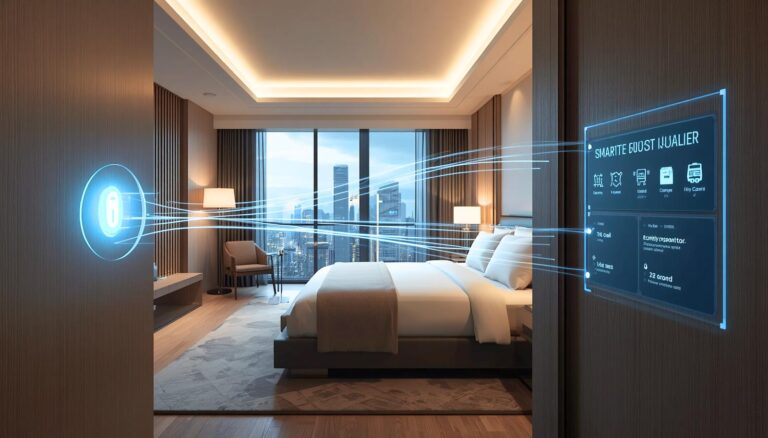
Modern smart hotel lock systems go beyond. Instead of inserting a physical card, the system links to your property management system (PMS).
When the PMS marks a room as checked out, the room automation system adjusts HVAC to a standby setpoint and turns off HVAC and air conditioning.
What this means for your property
- Energy reduction per room: You eliminate the biggest source of waste, guests leaving air conditioning on while they’re at breakfast or out and about.
- PMS integration: Systems like Raizo smart room automation connect to Opera, ESoft, Cloudbeds, and other major PMS platforms. Checkout triggers the energy-saving mode automatically.
- Enhanced returned guest experience: The room returns to the guest’s preferred room settings when the PMS registers their return.
2. Upgrade to LED Lighting Throughout the Property
LED lighting uses 50–75% less energy than fluorescent or halogen fittings and lasts 3–5 times longer. For a 200-room hotel, a full LED retrofit typically pays back within 2–3 years through energy and maintenance savings alone.
Where to prioritize LED upgrades
Not all areas receive equal returns. Start with the highest-burn locations first.
- Corridors and stairwells: These run 24 hours a day, every day. Switching from fluorescent tubes to LED strips or panels delivers instant savings.
- Public areas: The lobby, restaurant, gym, and meeting rooms often carry heavy decorative lighting loads. LEDs match the warmth and quality of halogen without the heat output.
- Guestrooms: Bedside lamps, bathroom lighting, and feature lighting all add up across 200 rooms.
Pair LEDs with motion sensors in low-traffic areas
Back-of-house corridors, storerooms, car parks, and service lifts are ideal locations for motion-activated LED lighting. Staff forget to switch off lights. Motion sensors don’t.
3. Optimize HVAC Setpoints for Unoccupied Rooms
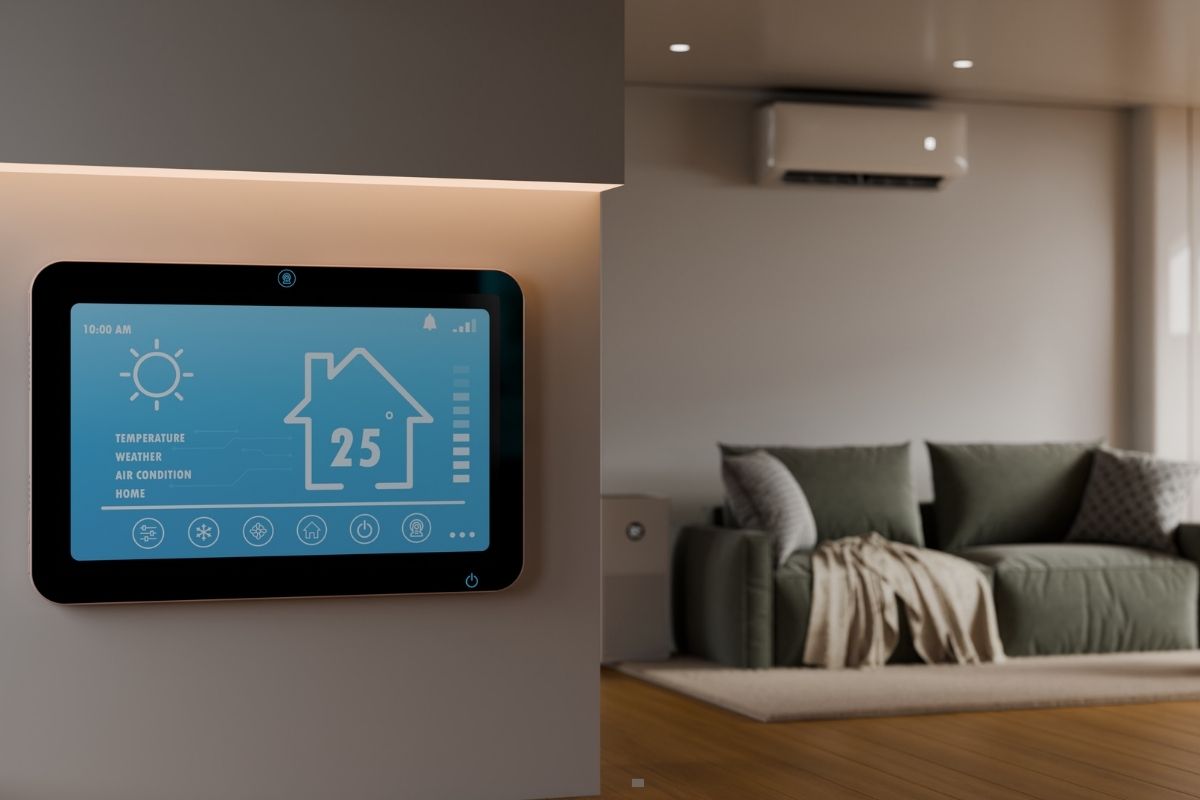
Set unoccupied rooms to 26–28°C, rather than leaving the unoccupied rooms at the default guest setting of 22–24°C. Combined with PMS-triggered automation, this single change can cut your HVAC load by 15–25% without affecting guest comfort at check-in.
The setting problem most hotels ignore
Check the guest rooms during low-occupancy periods. In most mid-tier Malaysian hotels, you’ll find rooms running at a low cooling temperature, 22°C or lower, with nobody in them.
Housekeeping finishes, the room is empty for hours, and the air conditioning runs at the same load as if a guest were present.
How to fix it without disrupting operations
- PMS-triggered setback: When your PMS marks a room as vacant or checked out, your room automation system raises the thermostat to a standby temperature setting (26–28°C) or turns the aircon off. When a booking is confirmed for that room, the system pre-cools the room 30–60 minutes before the expected check-in time.
- Manual override protocol: Give housekeeping a simple process to signal rooms that need pre-cooling after servicing. This prevents the opposite problem: a guest arriving to a warm room because the system didn’t receive the signal.
- Ventilation, not full cooling: Some properties use ventilation in vacant rooms to prevent humidity (relevant in Malaysia’s climate) while keeping the room cool and comfortable.
HVAC maintenance matters as much as setpoints
It’s challenging for a poorly maintained air conditioning unit to deliver efficient cooling results.
Dirty filters, blocked condenser coils, and refrigerant leaks all increase energy usage.
Schedule quarterly or yearly filter cleaning and annual coil inspections to ensure the air conditioning works efficiently.
4. Use Window Films and Blinds to Reduce Solar Heat Gain
Solar heat gain through unprotected glass is one of the most overlooked factors in the rising HVAC load in Malaysian hotels. Window films can reduce solar heat transmission by 40–70%, significantly reducing the cooling load.
Why window films matter in Malaysia’s climate
Malaysia sits close to the equator. Direct sunlight hits guest rooms hard in the afternoon.
Without protection, glass transmits that heat directly into the room, forcing air conditioning units to perform harder, often during peak demand periods, when TNB commercial tariffs are highest.
Window film vs. external shading vs. blinds
Solution | Solar Heat Reduction | Guest Experience Impact | Maintenance |
Solar control window film | 40–70% | Minimal, retains natural light | Low; 10–15 year lifespan |
External shading (louvres, fins) | 50–80% | None | Medium; cleaning, painting |
Internal blackout blinds | 30–50% (when closed) | Depends on guest behavior. | Low |
Practical implementation
- Specify the right film. Look for films with a Solar Heat Gain Coefficient (SHGC) below 0.4 and a Visible Light Transmittance (VLT) above 50%. You want to block heat without darkening the room, which may affect the guest experience.
- Combine with blinds for flexibility. Window film handles the baseline solar load. Blackout blinds give guests control over light levels without affecting the thermal glass’s performance.
5. Educate Staff and Guests
Technology handles the benchmark. Staff behaviour and guest habits determine how much of that benchmark you actually maintain. A 30-minute to 1-hour briefing with your housekeeping and front desk teams, supported by simple reminders, sorts out what your systems can do and what actually happens on the floor.
The staff behaviour gap
Your energy management systems optimize ideal HVAC settings and cut power in vacant rooms.
But housekeeping staff who keep the door open using doorstops during service, front desk staff who manually control room temperatures, and maintenance teams who bypass energy settings during repairs all increase your energy costs.
What works with hotel staff
- Include energy protocols in onboarding. New staff should understand the property’s energy targets and the specific behaviors they should do as part of the standard operating procedure.
- Post visual reminders at key decision points. A laminated card inside each guestroom service trolley, listing the four things to check before leaving a room (thermostat settings, lights off, curtains closed, door secured), reinforces the right habits.
- Give housekeeping supervisors an energy brief. A monthly 10-minute energy update, “Last month we saved RM X on this floor,” gives your supervisors context and ownership.
- Track and share results by floor or department. When your teams can see the outcomes, they engage with it. A simple monthly energy summary displayed in the staff area makes them aware of the actions they should take.
Influencing guest behaviour without damaging experience
- In-room cards: A short, friendly note near the thermostat reminding guests to raise the temperature or turn the aircon off when leaving.
- Towel and linen reuse programs: Standard practice in most mid-tier hotels, but the messaging matters. Frame reuse around guest convenience (“fresh towels available on request”).
- Highlight sustainability credentials on OTA listings: Many corporate and leisure travelers filter for sustainability-certified properties on Booking.com and Expedia. If your property achieves GBI certification, mention it in your OTA profile; the action sets your business apart.
6. Conduct Regular Energy Audits
An energy audit tells you exactly where your hotel is losing money, room by room, system by system. Without one, you and your staff are guessing. With one, your team knows what actions to prioritize, and you have a benchmark to measure your progress against.
What a hotel energy audit covers
A professional energy audit for Malaysian hotels typically examines the following:
- Sub-metering data: Which floors, zones, or systems consume more energy?
- HVAC performance: Are cooling units operating at rated efficiency? Are thermostat controls optimized correctly?
- Lighting inventory: What percentage of fittings are LED? Where are the highest-burn fluorescent or halogen fixtures?
- Building envelope: Where is solar heat gain highest? Are windows treated? Is insulation enough in ceiling spaces?
- Operational patterns: Are energy-saving protocols being followed by your staff? Where are the compliance gaps?
How often to audit
- Full external audit: Every 2–3 years, or before a major renovation or equipment replacement cycle.
- Internal monthly review: Monitor your energy cost per occupied room (EPOR) every month. A sudden spike signals a problem: a faulty HVAC unit, a broken thermostat, or a change in occupancy pattern before it compounds.
- Post-investment measurement: After any energy upgrade (LED retrofit, keycard system, window film), measure the energy usage for 3 months against the pre-installation benchmark. This gives you the data to justify the next investment.
The Selangor Sustainability Fee and audit documentation
Starting from January 2026, properties in Selangor pay a sustainability fee. While the fee structure is primarily a tax rather than a performance-based scheme, having documented energy audit data and a written energy management plan positions your property well for any future regulation tightening and for corporate accounts that require sustainability reporting from their hotel partners.
Conclusion
Reducing energy consumption in hotels is a series of decisions made at the right time, in the right order.
Start with the measures that cost the least and deliver fastest: HVAC setpoint controls, LED retrofits in high-burn areas, and a staff energy briefing, followed by installing window film.
Then use an energy audit to find what you’ve missed and build the case for larger capital investments, such as smart room automation and PMS integration.
The hotels that manage energy costs well in Malaysia over the next five years won’t be the ones that installed many advanced technologies. They’ll be the ones that made smart decisions and actually measured the results.
If you want to reduce hotel energy costs and build a property that runs leaner without sacrificing guest experience, discover our smart hotel automation system, or talk to the professional Raizo team today.
Key Strategies at a Glance
Strategy | Primary Energy Area | Typical Impact | Implementation Complexity |
Keycard power control | HVAC + lighting | High | Medium |
LED lighting upgrade | Lighting | High | Low |
HVAC setpoint optimisation | HVAC | High | Low–Medium |
Window films and blinds | HVAC (solar load) | Medium–High | Low |
Staff and guest education | All systems | Medium | Low |
Energy audits | All systems | Varies (diagnostic) | Low |