
Direct Answer
The rise of smart home technology has shifted from single, remote-controlled gadgets in the 1970s to connected automation devices controlled by apps and voice. The global smart home market is expected to reach about USD 230 billion in 2026 and USD 450 billion by 2032 (MarketsandMarkets). For developers, smart access, energy control, and security shape how homebuyers assess a unit.
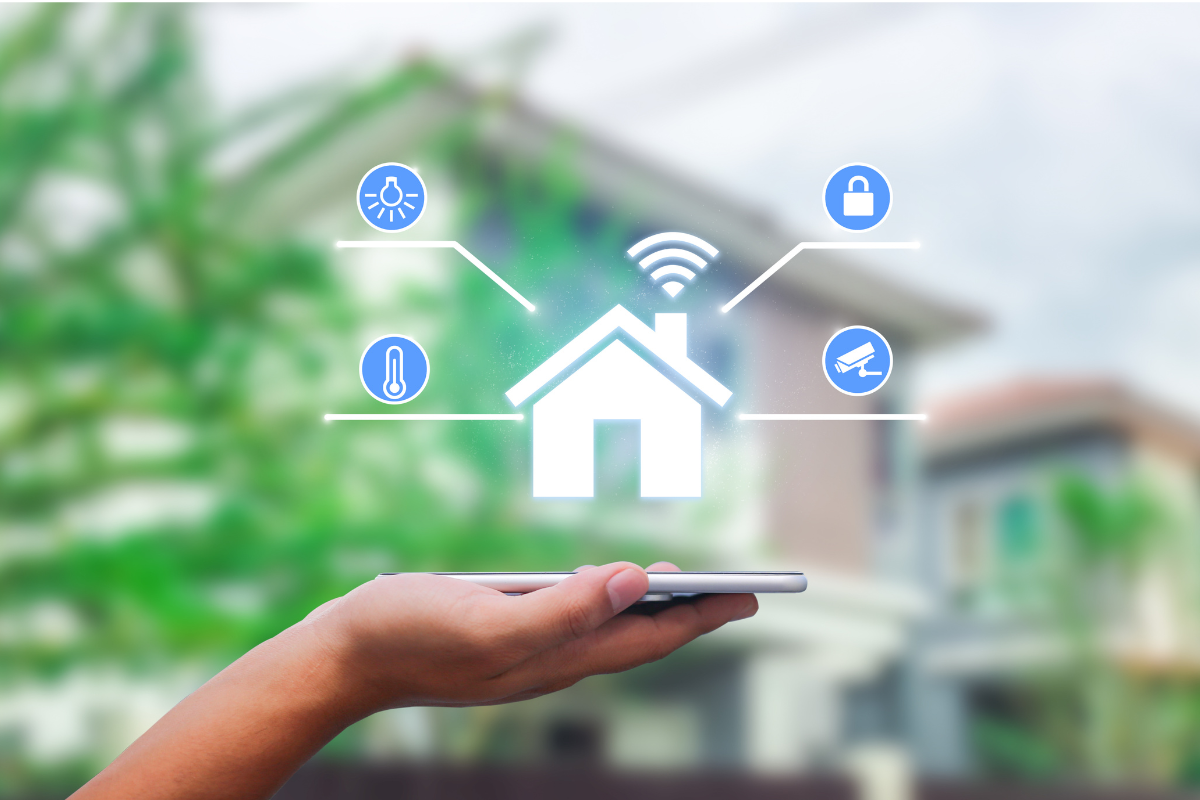
Someone asked a Reddit user about what changed his daily life most in 2024 on a smart home community. His answer wasn’t his car or his personal job. Instead, he said it was controlling the thermostat, lights, and security cameras from his smartphone.
Modern homeowners today value smart home technology that offers them better security and convenience that change their lives, beyond a roof to live under. Indeed, controlling smart home devices, such as thermostats, lights, and security systems, is what they appreciate most, without needing to reach for physical switches.
Imagine a homeowner walking into your property show unit already knowing what a smart home feels like, and noticing when a unit doesn’t have smart home features.
Indeed, the rise of smart home technology has come a long way from the past gadgets homeowners plug in themselves to smart home systems connected to the mobile app and AI voice assistants, such as Google Home and Alexa.
In this guide, we’ll cover where smart home came from, what’s driving smart home growth, what modern homebuyers expect, and what to plan for in your next project.
What is smart home technology?
Direct Answer
Smart home technology is any device or system in a home that connects to a network so that homeowners can monitor, control, or automate their home routine from a mobile app, there voice or a schedule.
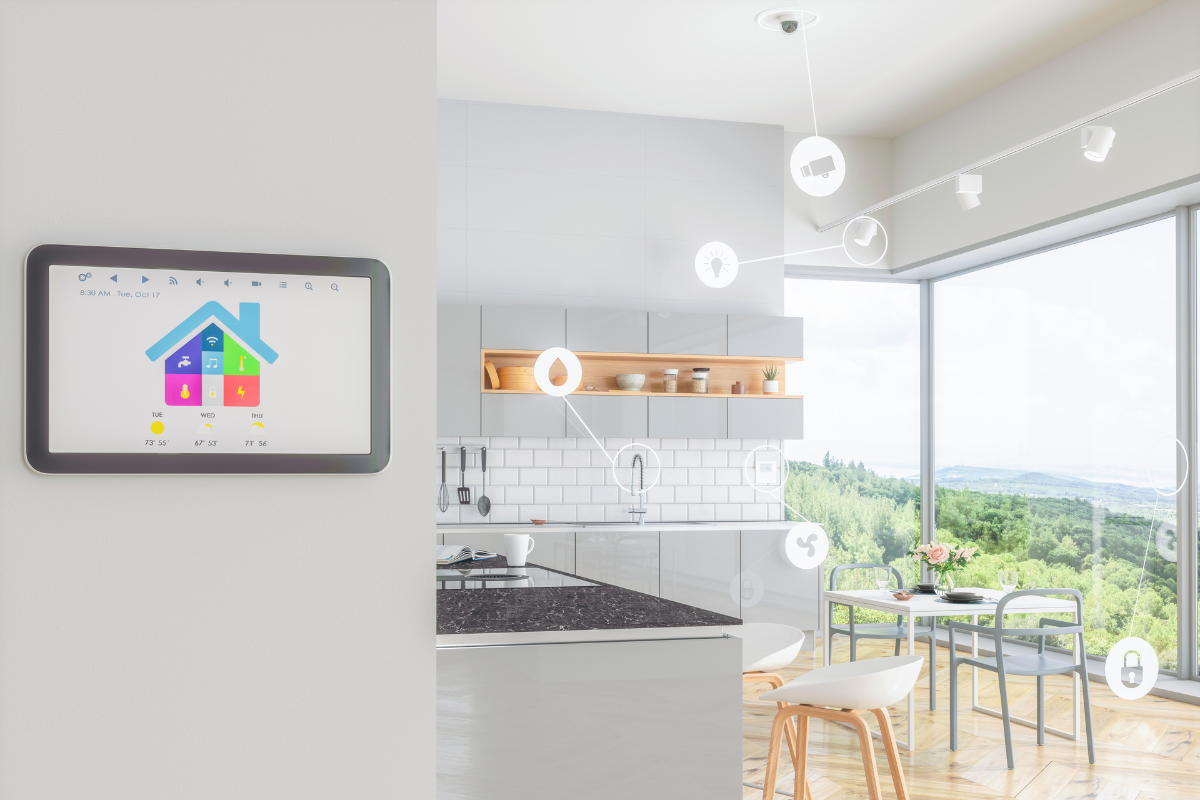
A smart door lock you interact with first every day is smart home technology. So are lighting, a video intercom, a smart air conditioner controller, a water leak sensor, a motion sensor, and a camera you monitor and control from other places.
How a smart home works
A smart home consists of 3 main components::
- Devices. Locks, cameras, sensors, lights, air conditioner controllers, plugs.
- A network and a hub. Devices talk over Wi-Fi, Zigbee, Z-Wave, or Thread. Matter, a shared standard launched in 2022, enables smart devices from different brands to work together.
- An app or a voice assistant. A centralized platform where homeowners monitor and control every smart device, such as Google Home, Alexa, and Raizo Smart.
Removing one smart home component can send a routine back to separate gadgets. A homeowner with multiple apps for multiple brands doesn’t have a smart home. Instead, he has many problems.
Smart home technology vs. home automation
Smart home technology includes both hardware and software. Smart home automation controls the technology: routines and rules that run without people pressing any buttons.
For instance, a smart door lock you open from a smartphone is smart home technology.
In contrast, a smart door lock that opens for the cleaner every Monday at 9 in the morning and locks itself at 12 in the afternoon is smart home automation. Discover our guide, ‘What is smart home automation,’ to learn how those smart home rules are built.
A short history of smart home technology
Direct Answer
Smart homes grew in 4 waves: mechanical automation, remote control, internet-connected devices, and today’s AI-led systems.
Wave 1: mechanical automation
The first thermostat appeared in 1830, and by the 1920s it was a common household product (CEDIA). Electric appliances did the same job by taking over tasks previously done manually, without any network.
Wave 2: remote control
X10 first arrived in the 1970s, allowing residents to switch appliances on and off through the electrical wiring. The Clapper was launched in the1980s. Wired home automation for lighting, security and heating appeared in bigger homes through the 1980s and 1990s.
These smart home systems worked, mostly. However, the smart home remote controls were expensive, fiddly, and locked to one installer.
Wave 3: the internet and the smartphone
Home internet changed how smart home devices function. For example, a homeowner could check their home from anywhere once a smart door lock or camera could reach a server.
The Nest thermostat launched in 2011 and learned a household’s schedule, followed by the launch of Amazon Echo in 2014, making voice control ordinary. Video doorbells for suburban front doors soon followed.
Wave 4: Matter and AI
Matter appeared in 2022 to resolve the compatibility issues. Smart home automation devices from different brands now connect and talk to each other, and they talk locally instead of routing every command through a server overseas.
On top of that, AI is the current wave: an intelligent system that spots patterns and acts on them, rather than waiting for a command from human homeowners.
Era | Milestone | What it meant for homes |
|---|---|---|
1830 to 1920s | Mechanical thermostat | A machine holds a setting so a person doesn’t have to |
1970s to 1990s | X10, wired automation systems | Remote control arrives, at a price, for a few homes |
2000s | Home broadband, Wi-Fi | Devices reach the internet |
2011 to 2014 | Nest thermostat, Amazon Echo | Learning and voice control go mainstream |
2022 | Matter standard | Brands start working together |
2023 onward | AI and sensing | Homes act without being asked |
Why smart home technology is rising so fast
Direct Answer
Cheaper devices, better connectivity, and homebuyers who already expect mobile app control have helped normalize smart home technology.
The market in numbers
The global smart home market accounts for approximately USD 230.76 billion in 2026 and is forecast to reach USD 450.20 billion by 2032, growing at 11.8% per year (MarketsandMarkets).
In fact, household ownership is significantly high in mature markets. According to Mintel UK, 83% of adults own a smart home device.
What modern residents actually want
Mintel’s research states at 3 factors:
- Security. Over half of US consumers name security as their main reason for buying smart home devices.
- Comfort and convenience. Control without getting up or searching for a physical key.
- Lower bills. 86% of UK consumers mention they’re looking for effective methods to lower energy costs.
You may have noticed what’s missing from the list of factors driving smart home purchases. No one buys a smart home for fancy gadgets. Homeowners buy a smart home for security and comfort.
A single app for the whole home
Controlling lights, the thermostat, and cameras from a smartphone simplifies daily life.
For you, as a property developer, the keyword is “one”. Modern homebuyers assess a smart home by whether they can monitor and control every smart device from a single mobile app. However, a property unit with 6 different mobile apps and brands doesn’t make the situation better than a property unit without a smart home.
Older residents and independent living
Smart home automation setup complexity is the usual objection, causing homeowners, especially older people, to refrain from the technology.
So the functionality plays an important role.
An 88-year-old Quora user described the smart home automation system he set up himself for under USD 2,500, including voice-controlled lights, a thermostat, a calendar, an automatic cat feeder, and solar panels. When he fell and couldn’t get up, he immediately instructed his voice assistant to call emergency services.
That story is important for 2 reasons. Senior homeowners can use these smart home systems, and their adult children will pay for the safety features. Three things do most of the heavy lifting:
- Fall detection by radar. Motion sensors in wall panels and light fittings spot when a person falls to the floor, without a camera in the room.
- Voice as the interface. Arthritis and poor eyesight set a challenge for older homeowners to see small buttons on a smartphone. However, speech and voice prompts make device activation easier.
- Routine alerts. The family gets notified in advance if the fridge hasn’t been opened by 9 a.m., or if water runs at 2 a.m.
The latest innovations in smart home technology
Direct Answer
The biggest innovations right now are AI-led automation, the Matter standard, energy management, smarter access control, and sensors that catch problems early.
AI that acts without being asked by homeowners
Older smart home automation systems followed exactly the rules you wrote and listed. Newer ones learn specific situations: when the property unit is empty, which rooms get hot, and when the air conditioner isn’t required.
Matter and devices that work together
According to Mintel, 2 in 5 UK users get frustrated when their smart home devices don’t work together. Thus, Matter becomes a lifesaver for modern homeowners. For property developers, Matter means the home automation system a homeowner uses today can fit a smart device that they buy in 3 years.
Smart energy management
Occupancy sensors let lights and air conditioners respond to whether people are home. The sensors also help homeowners reduce their electricity bill.
Smart access
Smart access includes smart door locks, mobile access, face recognition, and video intercoms. For multi-unit properties, access is where smart home technology suits well.
Biometric security and health sensing
Keyless unlock methods, such as fingerprint and facial recognition, are already common on smart door locks. On the other hand, health and air quality sensors are newer and worth observing continuously.
Sensors that cut defect claims
Forbes reported on builders fitting sensor kits during construction. Leak detection in the main plumbing line and filter monitors that flag a blocked filter before the filter breaks down in a home.
The amount of money behind that idea is real. US publicly traded homebuilders spend around USD 1 billion every quarter on warranty costs (Warranty Week). Burst pipes are one of the most common claims.
10 key smart home features buyers now expect
Direct Answer
Homebuyers often ask about access, security, energy, and comfort, in that order. The 10 features below cover all factors modern homebuyers favor.
No. | Feature | What the resident gets | What you get |
|---|---|---|---|
1 | Smart door lock | No keys to lose | Fewer lockout calls, no re-keying |
2 | Video intercom | Sees who’s at the door before opening | Fewer lobby disputes |
3 | Security cameras | Checks the unit from anywhere | A stronger security story at launch |
4 | Smart lighting | Lights off when nobody’s home | Lower common-area bills |
5 | Smart aircon control | Comes home to a cool unit | The biggest energy line item, managed |
6 | Smart plugs | Controls older appliances | Cheap way to extend the system |
7 | Voice assistant | Hands-free control | Accessibility for older buyers |
8 | Sensors (motion, leak, door) | Early warning on leaks | Fewer defect claims |
9 | Energy monitoring | Sees where the money goes | Proof your efficiency claims are real |
10 | One app or hub | Everything in one place | Fewer support calls |
Learn more about Raizo smart home automation solutions, ranging from smart home security and lighting to switches and curtain.
Which device is most common in a smart home?
Smart security devices and speakers lead in most markets, followed by smart door locks and cameras. In a developer-fitted project, the order flips: the smart door lock goes in first, because the lock is the device every homeowner interacts with daily.
How smart home technology is changing property development
Direct Answer
Smart home technology now affects how your property units sell, how fast handover goes, and how much work lands on your management team afterward.
From aftermarket add-on to fitted feature
Builders left smart technology to the homebuyer for years. Forbes described the reason: hundreds of competing manufacturers, wiring requirements that differed from product to product, and compatibility problems so complex that stepping aside was the easier option for builders.
What changed is the preconfigured kit. Brian McCarthy, co-owner of Albuquerque builder Abrazo Homes, launched RIoT Technology to sell one thing: sensors, valves, and devices that a builder’s existing subcontractors install during construction, each trade working from its own how-to guide. About 60 homes were running on the system when Forbes covered it in 2025.
Meanwhile, Ryan Hillgartner, director of marketing at Tim O’Brien Homes, who has installed the smart home system in multiple houses, said his trades were impressed by how easy these smart home technologies were to install, especially compared with other smart home products.
Fitting during construction also offers you things that a retrofit can’t. Wiring runs where it should. Doors are specified for the smart door lock instead of being drilled later.
Smart homes as a selling point
Modern homebuyers see a smart-ready unit as newer and more tech-forward. When comparing 2 similar property projects, buyers will decide based on smart home devices and the app.
Smart access for multi-unit buildings
Here are some common operational cases that you and your team may have encountered. For example, Cards and physical keys often get lost. Residents move out and forget to return the keys or cards. Contractors need entry on a Tuesday morning, and someone needs to be there with a key.
Smart access replaces all 3 problems with a mobile credential stored on the homeowner’s smartphone.
How cleaners, contractors, and service teams get in
A cleaning professional on Quora explained how his job changed. Homeowners today issue a temporary code that functions only on Tuesdays between 10 am and 2 pm.
The smart lock system records exactly when the cleaner arrives and leaves, letting homeowners monitor the status. Owners check the doorbell camera before unlocking, and camera footage settles disputes when things happen and owners need proof.
The same concept applies to high-rise condos, covering your contractors, cleaners, movers, agents, and maintenance crews. As a result, homeowners don’t need to hide a spare key under the mat, and the smart lock automatically records every entry.
Who services the smart home after handover?
This is the question your homebuyers will ask, and it’s the question most smart home suppliers dodge.
A thread on home service trends brings up what’s coming: demand for installers and multi-skilled technicians, scheduling software that plans visits, and maintenance triggered by a sensor rather than a calendar.
Before you sign a contract to secure the deal, get a straightforward answer on who still shows up in the coming years when a smart lock fails, how fast, and whether parts are available locally.
What’s coming for property management
Property managers discussing the next 5 to 10 years named:
- Smart home automation systems that flag maintenance before a homeowner complains.
- Data and AI for pricing and planning.
- Drones for building inspection and marketing photography.
- AR and VR walkthroughs for units that aren’t built yet.
- Chatbots for routine resident questions.
One reply in that discussion is worth keeping in mind: Adopting early gives you a competitive advantage.
What is the future of smart homes?
Direct Answer
Expect homes that act on their own, manage their own power, and flag health and maintenance issues before anyone notices.
From voice commands to homes that act on their own
Today, a smart home is a voice-activated remote system that reacts to homeowners’ voice commands.
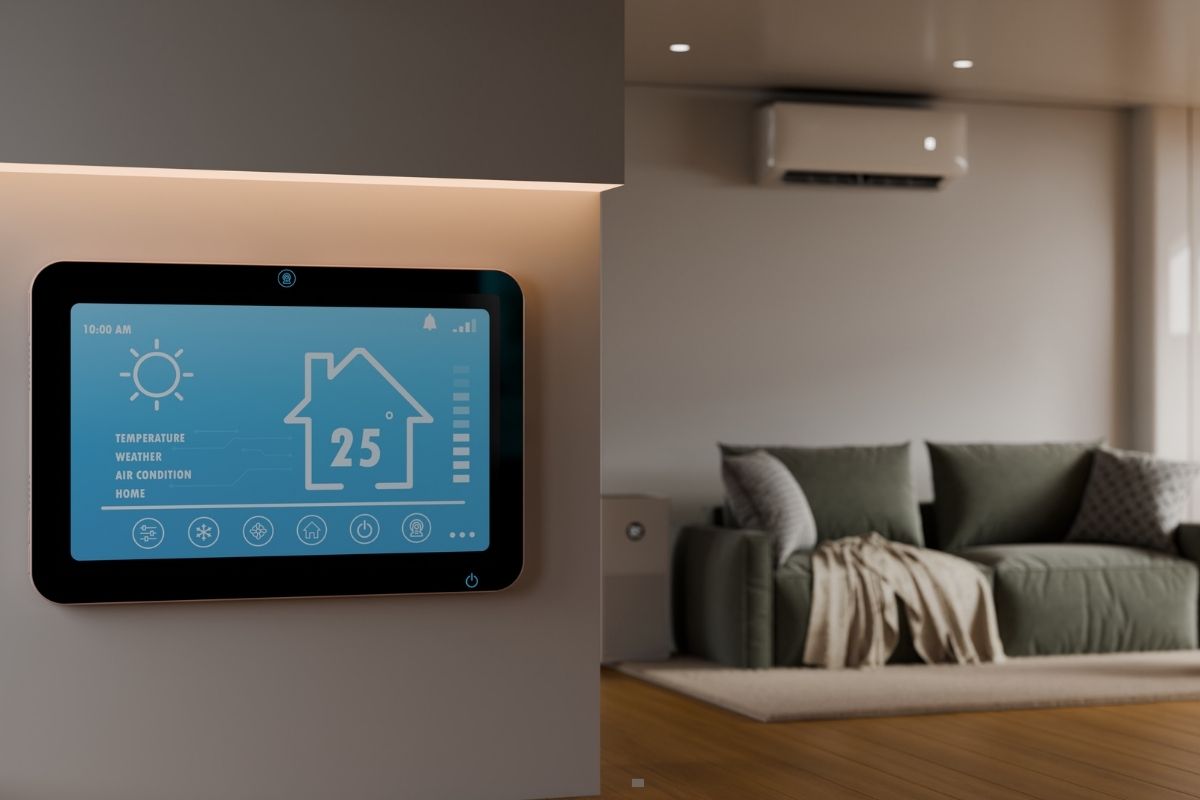
The next big thing is the presence sensor. For instance, radar and ultra-wideband sensors let the system know who’s in which room, so the home can lower the air conditioner automatically when someone is napping, without a complicated routine people had to set up.
Homes that manage their own power
Batteries and EV chargers turn a home into a small power station. The smart home automation system draws power from the battery when electricity is expensive and recharges when electricity is affordable. Forbes noted that time-of-use billing is becoming standard, which makes timing worthwhile.
For your property projects, the design question is about ducting, riser capacity, and EV charging provision. Although planning ducting, riser capacity, and EV charging provision is cheap, are cheap to plan, but expensive to retrofit.
Aging in place as a design requirement
According to platforms like iProperty and PropertyGuru Malaysia, Individuals aged 40 and above dominate homeownership in Malaysia because rising property prices and stagnant wages force younger millennials and Gen Z to delay buying their own homes.
As a result, multi-generational housing remains highly relevant, with previous consumer data showing that up to 49% of young adults under age 30 continue to live under one roof with their parents to share financial resources.
The data proves that homebuyers are getting older, and multi-generation households have become common. As a result, fall detection, voice control, and wide doorways are becoming standard in homes.
Homes that watch air and health
People spend approximately 90% of their time indoors, according to the U.S. Environmental Protection Agency (EPA), which makes air quality worth measuring. Particulate, humidity, and temperature sensors are affordable. Health sensors built into mirrors and plumbing are further out.
Home data that guides your next specification
This is the part you, as a property developer, should care about most.
When you monitor a few hundred property units, you learn which specifications actually pay back. Does the better insulation work well? Does the more expensive glazing reduce the air conditioner load? One US builder is pooling exactly this data to answer those questions with numbers. Plus, insurers are starting to observe monitored buildings.
Smart buildings and smart communities
The property unit connects to the building, including lifts, car park, visitor management, and common-area energy. Access control is commonly the first system every resident, guest, and contractor touches and interacts with before entering the unit.
Challenges that come with the rise of smart home technology
Not every homeowner is convinced by the rise of smart home technology. Indeed, A Quora user dismissed the whole category: IoT is more sizzle than substance, and switching lights on from your smartphone is underwhelming.
He has a point about gadgets. Switching a lamp on remotely is a party trick. The value in a multi-unit project comes from other places, such as centrally controlled access, monitorable energy, and problems you hear about before homeowners call.
4 risks are worth planning for: resident data, compatibility, cost, and long-term support.
Protecting resident data and devices
Trust is the first element homeowners prioritize. Indeed, Mintel found 2 in 3 Canadian consumers concerned about their data being hacked, and property managers raised the same concern.
What to insist on:
- Encryption on the lock, the app, and anything stored in the cloud.
- Firmware updates that the suppliers commit to, in black-and-white writing, for a defined number of years.
- Local control. Matter keeps commands inside the home, which is faster and reveals less.
- Offline fallback. Homeowners can enter the home, even when the internet goes off. Ask the supplier to demonstrate the function.
Compatibility and setup
Mintel’s 2 in 5 frustrated users all faced the same problem: home automation devices that don’t work with each other. Thus, choosing open standards, checking door compatibility before the order goes in, and confirming the smart home system talks to your property management platforms matters.
Cost against return
According to recent data from Chain Store Age, over 60% of US consumers prefer lower-cost options, and your homebuyers will want the same.
One of the best ways to fulfill homebuyers’ needs is to build the case on the ease of operation: fewer replacement cards, fewer lockout callouts, lower common-area energy, fewer defect claims
Support after the supplier goes quiet
The fear every developer names: the supplier disappears after handover.
Risk | What goes wrong | What to ask your supplier |
|---|---|---|
The supplier disappears | No parts, no help, dead system | How long have you operated here? Show me 3 projects from 5 years ago |
Slow response | Complaints compound on your management team | What’s your response time, in writing? |
No spare parts | One failed smart device means one dissatisfied resident | Are parts available locally? For how many years? |
Firmware abandoned | Security holes nobody patches | How long will you support this model? |
Can’t scale | Phase 2 needs a different system | Will this work across future phases? |
How to plan smart home technology into your next project
Direct Answer
The steps to plan smart home technology include picking the features your buyers want, checking compatibility early, asking for project references and local support, and planning for later phases before you sign anything.
Step 1: Pick the features your homebuyers actually look for
Match the smart home automation specification to the segment. A family project requires a solid smart door lock, a video intercom, and cameras. A project aimed at older buyers or multi-generation households needs features such as voice control and fall detection.
Step 2: Check compatibility early
Door type, thickness, and fire rating determine which smart door locks are possible. Check the requirements before the tender, not during installation.
Step 3: ask for references and local support
Ask for project references of similar size and contact the management office. Ask how long a service call takes.
Discover property projects that Raizo Smart Living & Smart Hospitality has worked with.
Step 4: plan for later phases
Specify something homebuyers can still purchase in 5 years, from a supplier who’ll still exist, on a standard other smart devices can join.
Conclusion
The rise of smart home technology has turned home automation features from a nice-to-have into a must-have for modern homebuyers.
The important decisions are often the unglamorous ones: which access system goes in, whether the smart home automation system uses an open standard, and who will service the system in the future.
Making the right decision allow smart home technology to quietly do its job. Conversely, the wrong decision can leave your management team spending the next decade fielding complaints and calls from homeowners.
Interested in exploring a reliable smart home automation solution for your upcoming property projects? Talk to our experienced Raizo team about smart access for your next development today.